ZHIWEIYUN · INDUSTRIAL WORLDS · SELF-DIRECTED LEARNING
SteelScapeFrom iron ore to steel: explore how an integrated works operates.
Follow an illustrative blast-furnace steelmaking route. Explore workers, materials, signs, hazards, PPE, and the interactive process lessons.
No login · progress remains in this browser · not formal training credit
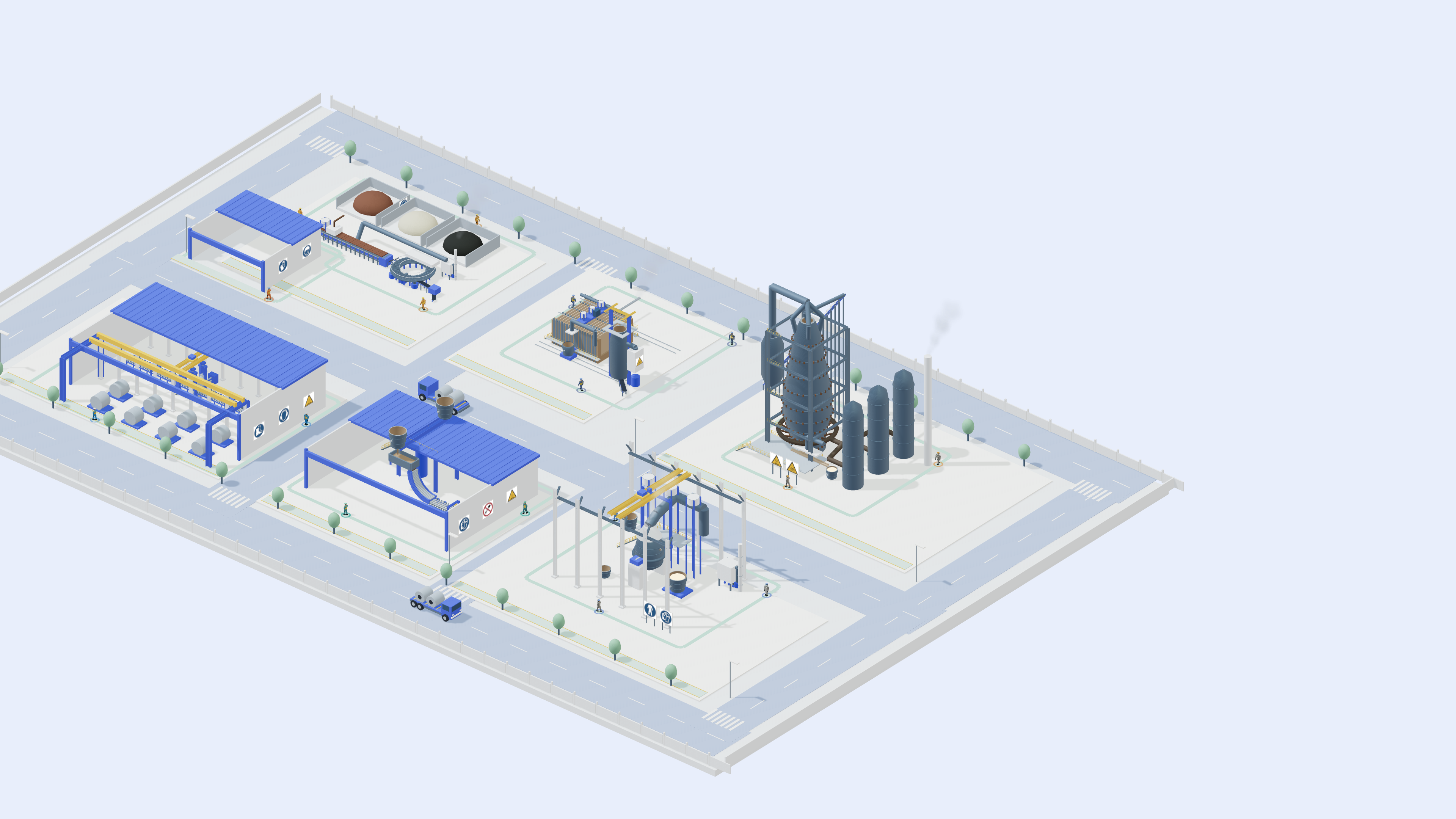 Interactive learning scene Explore ↗
12 process steps
7 learning areas
21 representative jobs
0 sign-in steps
BLAST FURNACE · IRONMAKING
How does ore become hot metal?
Sinter, pellets, or lump ore and coke enter the top of the blast furnace. Hot blast supports combustion and reduction. Iron melts and collects in the hearth; slag separates above it. The resulting hot metal moves on to steelmaking.
1 · Charge the furnace
Iron-bearing burden, coke, and fluxes descend through the furnace in controlled layers.
2 · Hot blast and reduction
Hot gas rises through the burden. Reducing gas removes oxygen from iron oxides. Gas flow and solid burden move in opposite directions.
3 · Separate hot metal and slag
Molten iron collects in the hearth while slag forms above it. They are tapped and handled separately.
4 · Tap and recover gas
Hot metal flows through dry runners into a refractory-lined vessel. Cleaned blast-furnace gas enters a recovery system.
Learning model scope: the animation illustrates process relationships. It does not show measured temperatures, gas concentrations, or an engineered plant layout.
JOBS · HAZARDS · PROTECTION
Jobs have different tasks and exposure conditions.
Cast-house worker
Typical focus: tapping area, runners, and hot-metal transfer.
Hazard topics: heat and thermal radiation, process fume, noise, and carbon monoxide where present.
Protection concepts: prioritize fume capture, thermal barriers, safe remote operation, and gas monitoring. PPE selection depends on task and assessed exposure.
Hot-blast stove operator
Typical focus: inspect the stove and gas lines from designated routes.
Hazard topics: carbon monoxide and other process gases where present, residual heat, and noise.
Protection concepts: gas monitoring, alarms, ventilation, and controlled access. A portable detector is monitoring equipment, not PPE.
Furnace-gas inspector
Typical focus: perimeter monitoring and access-route checks.
Hazard topics: carbon monoxide and other process gases; confirm system-specific hazards and exposure conditions.
Protection concepts: follow task-specific monitoring and entry procedures. Unknown or oxygen-deficient atmospheres require dedicated controls and authorization.
These are teaching examples, not a site risk assessment or PPE specification. Confirm hazards, exposure, and controls through workplace assessment.
INTERACTIVE LEARNING · BLAST-FURNACE PILOT
Continue in the 3D model
Select a blast-furnace worker to explore the job card, hazard factors, and PPE illustration. Open the process course to watch furnace charging, hot blast and reduction, separation, and transfer. The learning practice can be opened while keeping the scene available.
Translation coverage: the blast-furnace learning chain is the first English pilot. Other process areas and most of the question bank are still being translated and reviewed; use the language switch to return to the complete Chinese edition.
SOURCE AND REVIEW STATUS
Chinese standards remain the cited sources.
This English learning edition keeps Chinese standard identifiers and original source scope. Workplace sign artwork remains in its source language with contextual explanations. English translation and professional technical review are pending. This resource does not replace local regulations, site-specific assessment, formal training, or professional advice.
Engineering-control placements are teaching illustrations and remain marked for expert review. PPE examples do not represent a complete equipment specification or certification.